

Suffield Suffers Smallpox
Do you remember the first time you were sick away from home? For me, it was my freshman year of college when I had a nasty case of strep throat. My roommate was away that weekend and so I was in effect quarantined in my room alone. While it was not a fun experience, I knew it was temporary. I was able to get myself to the university health center to get checked out and get a prescription for antibiotics. I was soon on the mend and was able to see my friends without the fear of infecting others. Looking back on the experience, I am forever grateful that my first time being sick on my own was just strep throat and that I lived in a time where it was easily curable. Unfortunately, for residents of Suffield long ago, their first experience being sick on their own might very well have been their last.
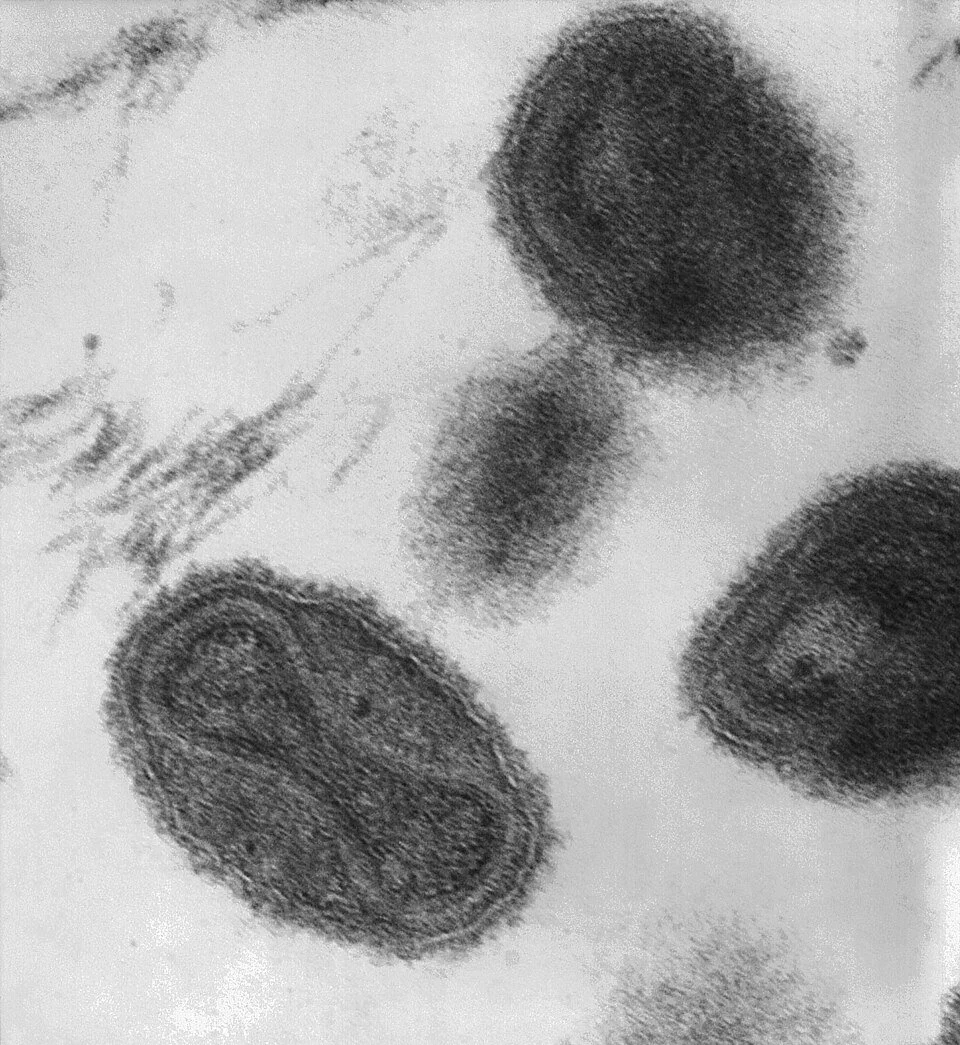
The smallpox virus under an electron microscope. Credit Centers for Disease Control
Smallpox is believed to have begun ravaging humanity around 4,000 years ago. The disease was well established in Europe by the time that colonists were crossing the Atlantic for North America. They brought the disease with them and soon outbreaks were occurring both among the English and native populations. Due to their lack of exposure to the disease, the indigenous peoples died in great numbers during outbreaks.
For the early inhabitants of Suffield, smallpox was a constant spectre. Since the community was located along both the Connecticut River and the Boston Post Road, it was incredibly difficult to isolate the town in the event of an outbreak. An attempt to contain the disease was exemplified in the life and death of one Richard Austin.
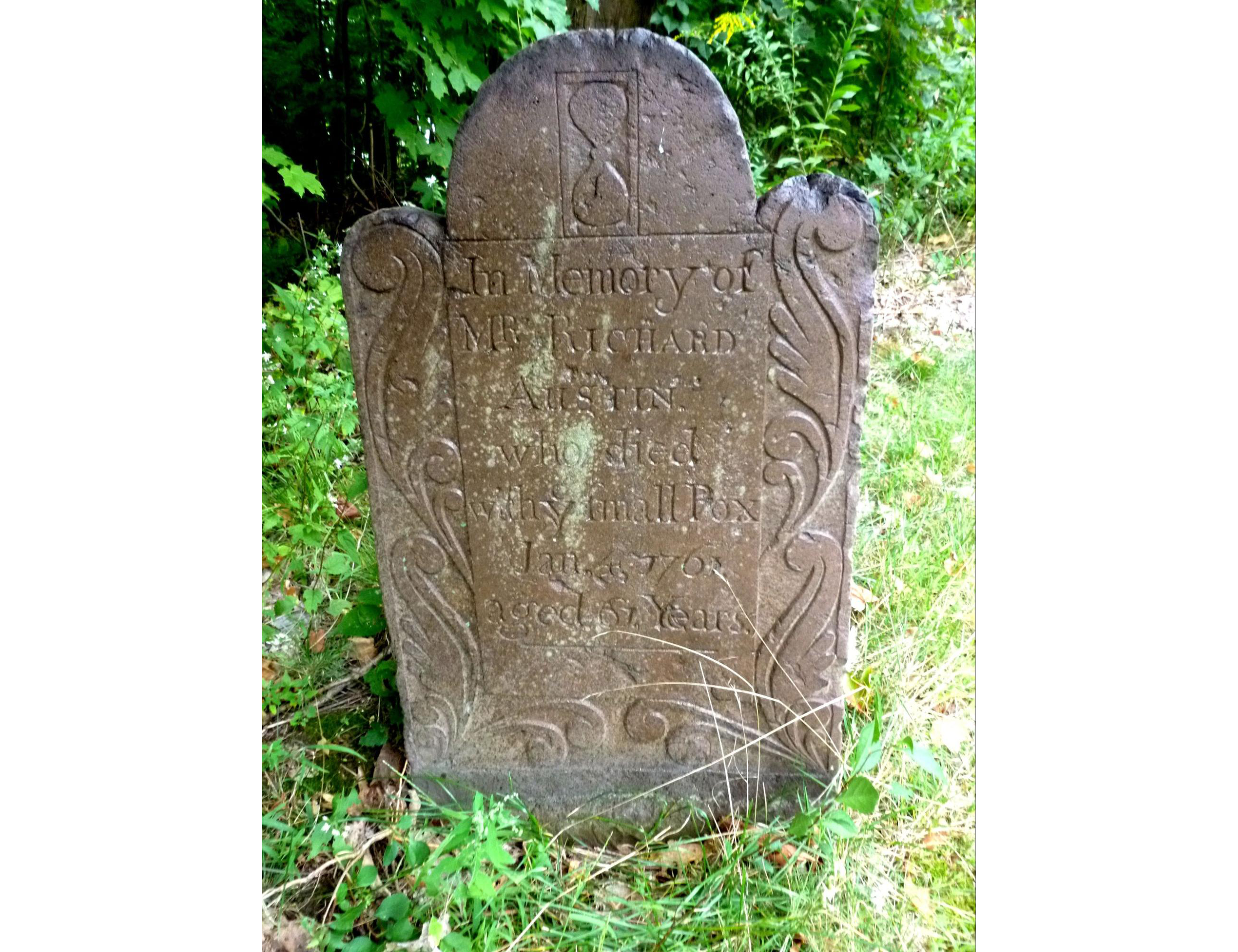
The gravestone of Richard Austin. The epitaph reads “In memory of Mr. Richard Austin who died with smallpox Jan. 4 1761 aged 61 years.” Credit Tony Maniscalco via Find A Grave
Austin was a farmer and carpenter. Little is known about how he contracted smallpox or what his experience with the disease was, but based on historical accounts from the time period that documented smallpox and its effects, we can try to piece together his final days.
Austin’s gravestone lists his date of death as January 4, 1761. Both the date and the season may have played a role in his death. Smallpox typically requires extended close contact for transmission, so the winter was a more probable time for the disease to spread. Additionally, the French and Indian War had come to an end the previous fall which would have meant that a large number of colonial troops would have been returning home both to Suffield and through Suffield via the Boston Post Road. This great movement of people combined with the need for closer quarters during the winter made an outbreak more likely.
After his contact with the individual who infected him, Richard Austin would have felt fine for around two weeks. The first sign of illness would have come on suddenly and featured a fever, nausea, vomiting, headache, and muscle ache. These symptoms would have lasted two to four days. Since these symptoms are common amongst many ailments, Austin would have rested at home, hoping the illness would pass.
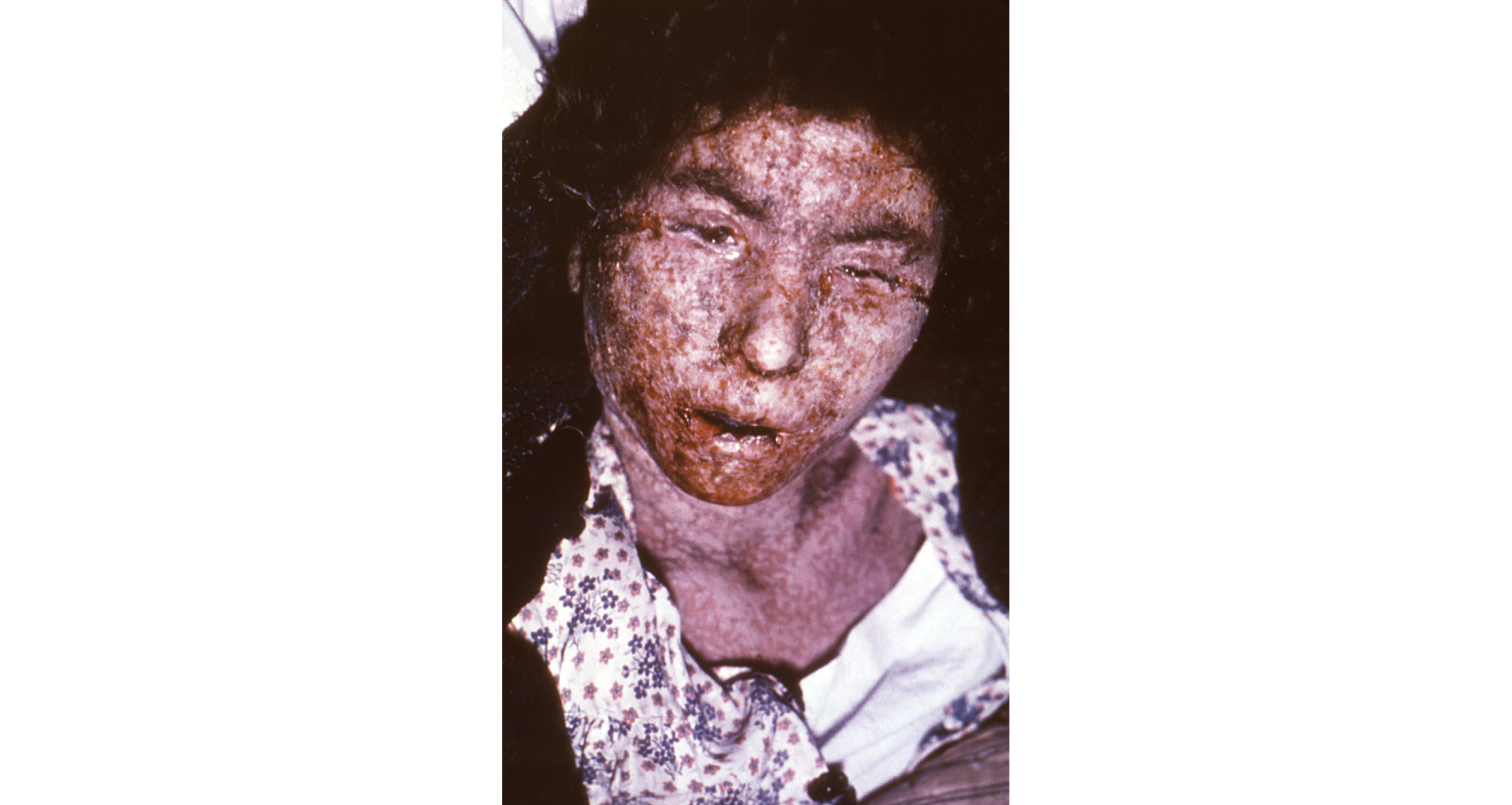
A female smallpox victim from Italy in 1965. Credit Centers for Disease Control
By the third or fourth day, his fever would have broken and he might have even begun to feel slightly better, but his hopes and those of his loved ones for a speedy recovery were certainly dashed by the appearance of the dreaded smallpox rash. The appearance of the rash indicated that Richard was highly contagious. To prevent the further spread of the disease, he would have been sent to Suffield’s pesthouse. Located along what is now River Boulevard, the pest house was a place where people with contagious diseases would quarantine until they were no longer symptomatic or died.
Over the next week or so, his fever would have spiked, and the rash would have gotten worse. Painful pustules would have developed and would have felt like hard beads implanted in his skin making any movement torture. His family would have had no way to help him and would have only been able to watch him from afar as he slowly wasted away.
Eventually, Richard’s body would give in. While we still do not understand exactly how smallpox kills people, some scientists believe it may be the body’s own immune response gone awry that is a fatal factor. Even in death, Richard’s body was considered dangerous to the community. To prevent Richard from spreading smallpox from beyond the grave, he was buried near the pest house near the Connecticut River.
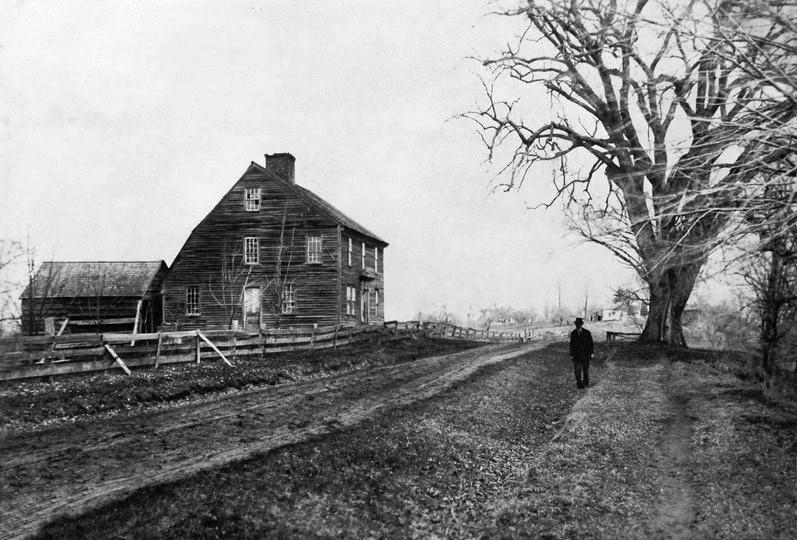
A pre-1910 photograph of River Boulevard looking north. In the distance would have been where the pest house would have been. Credit Kent Memorial Library via Laurie Tavino
Smallpox was far from done with Suffield and another outbreak occurred in 1792. The town acted quickly to quell the outbreak by establishing two pest houses. One near present day Sunrise Park and the other near West Suffield center. The owners of the houses were compensated by the town 4¢ for each person quarantined there. Additionally, the town voted to take the incredibly progressive step of mandating inoculation for town residents.
Inoculation was a procedure that aimed to help a person acquire immunity to a disease, but was more risky than vaccination. It involved the scabs or lymph fluid of a person infected with smallpox being placed in a cut in a healthy person’s arm or leg. Usually, the inoculated person would develop mild symptoms of smallpox, however, there was the chance that they might become ill with fullblown smallpox, therefore, they needed to stay in the pest house until they recovered. This procedure almost certainly saved lives in 1792, however, the town voted against mandatory inoculation during the next smallpox outbreak in 1801 for reasons not clear to the author at the time of publication of this blog.

A child being inoculated for smallpox. Credit Robert Thom
Unbeknownst to the people of Suffield at that time, an innovation meant that it was the beginning of the end for smallpox. In 1796, Edward Jenner developed and successfully proved the effectiveness of a smallpox vaccine developed using the cowpox virus. Despite this new vaccine, outbreaks still occurred with some regularity up until the early 20th century due to difficulties caused by vaccine costs to patients, distribution difficulties, and vaccine resistance. The last American outbreak occurred in Boston in 1905 and with the implementation of vaccines for children, the last case of smallpox in the US occurred in 1949. With the threat eliminated at home, the United States government financed the World Health Organization’s drive to eliminate the disease once and for all which was successfully achieved in 1980.
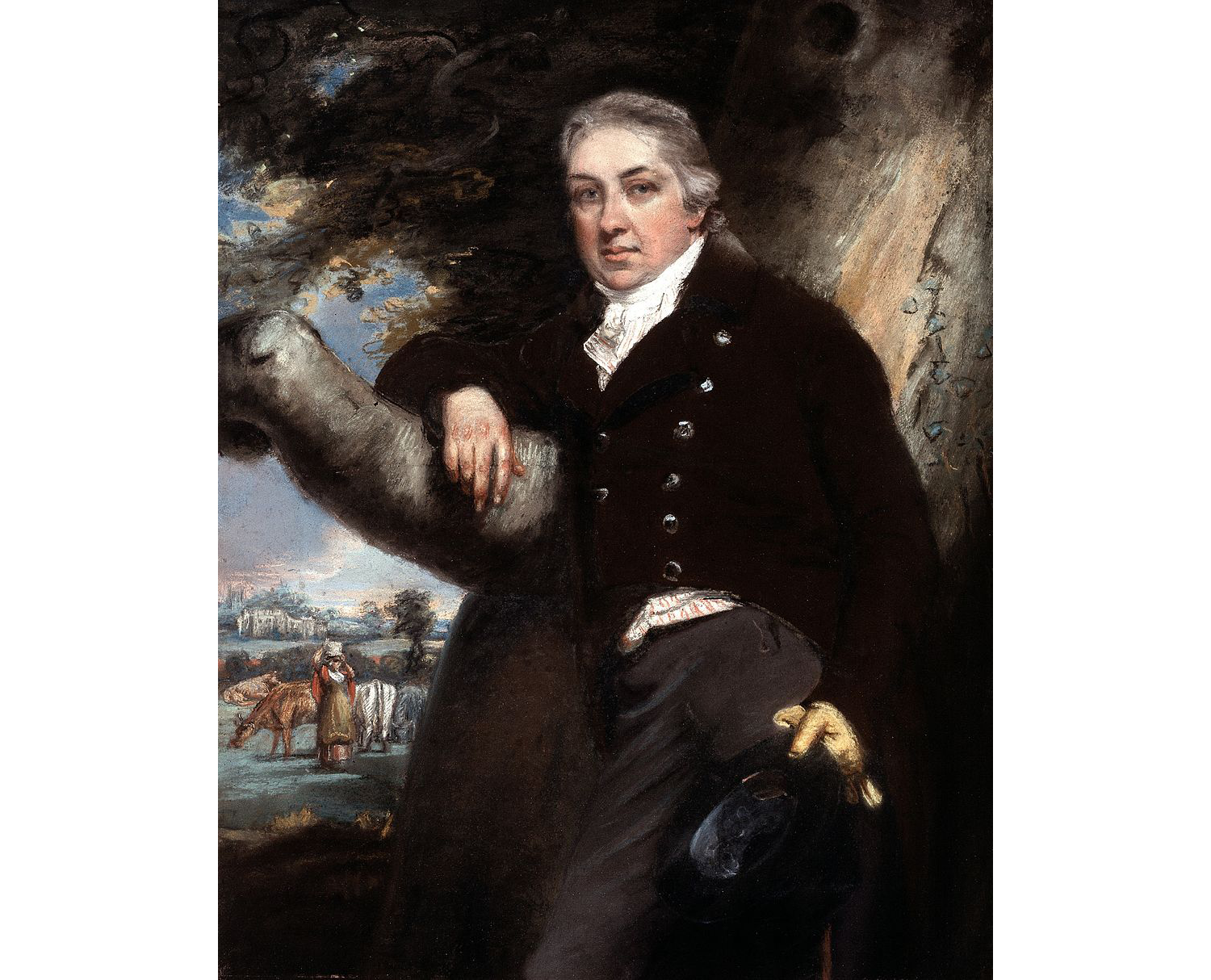
Edward Jenner the inventor of the smallpox vaccine. Credit John Raphael Smith
As of today, the only samples of the live virus available are kept in labs in the United States and Russia. While not needed to combat smallpox, the smallpox vaccine has been recently used to combat the outbreak of mpox.
I am thankful to live in a world where people no longer die horrid painful lonely deaths from smallpox and then must rest forever alone away from their loved ones.
Bibliography
Alcorn, Robert Hayden. A Biography of a Town: Suffield Connecticut 1670-1970. Suffield, Connecticut : 300th Anniversary Committee of the Town of Suffield, 1970.
Atkinson, William, Charles Wolfe, and Jennifer Hamborsky. Epidemiology and prevention of vaccine-preventable diseases. 9th ed. Atlanta, GA: Dept. of Health and Human Services, Centers for Disease Control and Prevention, 2006.
Rao AK, Minhaj FS, Carter RJ, et al. Use of JYNNEOS (Smallpox and Mpox Vaccine, Live, Nonreplicating) for Persons Aged ≥18 Years at Risk for Mpox During an Mpox Outbreak: Recommendations of the Advisory Committee on Immunization Practices — United States, 2023. MMWR Morb Mortal Wkly Rep 2025;74:385–392. DOI: http://dx.doi.org/10.15585/mmwr.mm7422a3
Tavino, Laurie. Suffield’s Old Bridge Neighborhood. Charleston, SC: Arcadia Publishing, 2009.
