
The Historic Trees of Suffield
Do you have a special tree in your life or had one in the past? For me it was a tree planted by my uncle in front of my elementary school. My Uncle Ed was the city forester of Springfield at the time when I was growing up. Every year, he would go to one of the elementary schools on Arbor Day and plant a tree with the help of the school’s students. I will always cherish the memory of being able to plant a tree with my uncle and my classmates. On a recent visit to my elementary school, I was delighted to see that the tree still stands tall. My hope is that I can someday share this memory from my childhood with my children and perhaps even with their children.
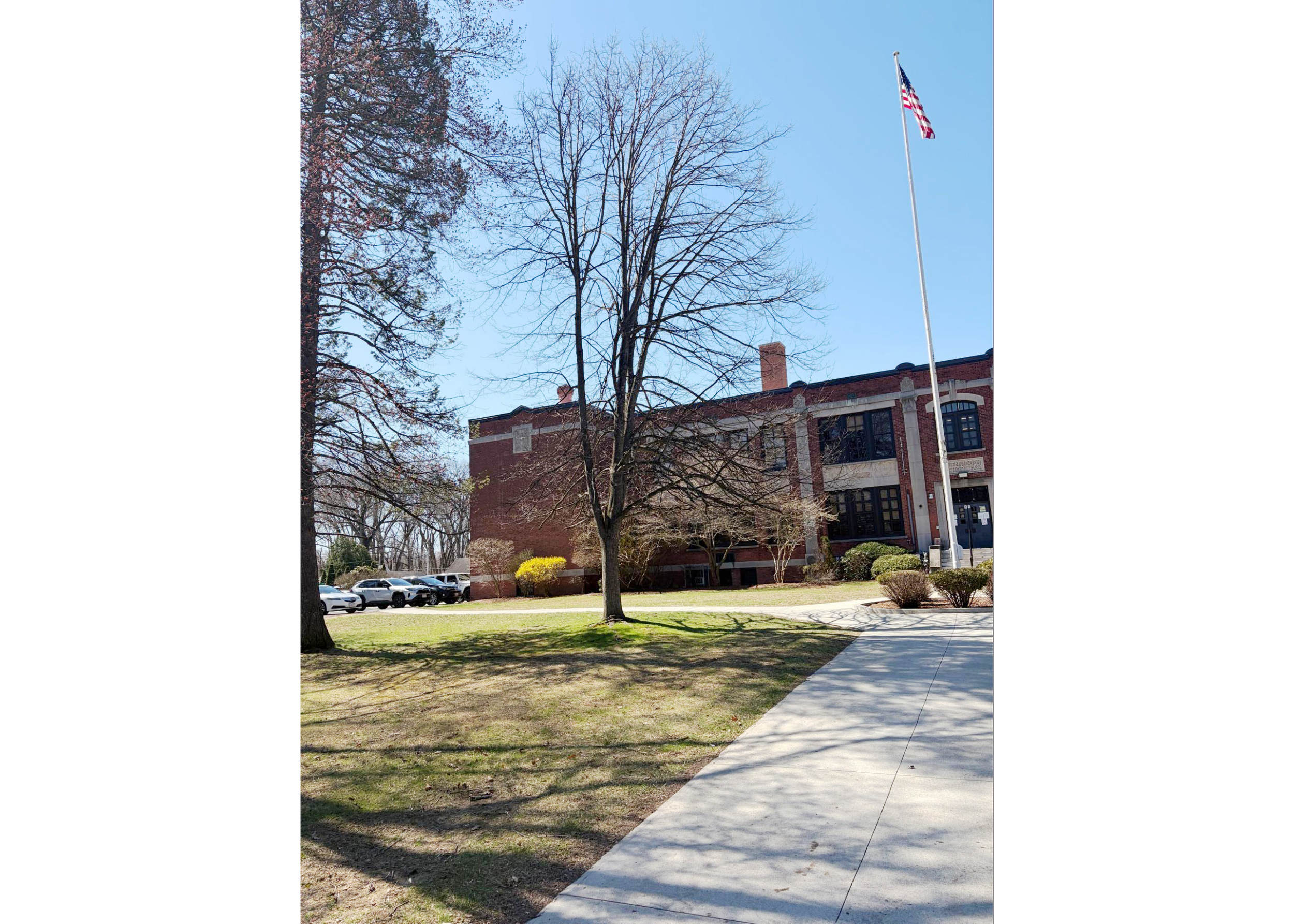
The tree I planted with my uncle and my classmates in the late 20th century. Credit author photo
Suffield also had trees in the past that its inhabitants felt were significant because they were either associated with the founding of the town or the founding of our country. In both cases, they were oak trees, members of the genus Quercus. Oak trees would have been plentiful when colonists first arrived in what is now Suffield because they are a fire-resistant species. This was consequential because Native Americans practiced controlled burns to prevent larger natural forest fires, to clear land for agriculture and hunting, and as a form of pest control. It was into this environment that the Spencer and Trumble oaks started growing.
The Spencer Oak was a Chestnut Oak (Quercus montana) that was located on North Stone Street. I was notable for both its size and its longevity. Standing 75 feet tall, 18.5 feet wide, and having a 117-foot spread, it was the largest recorded tree of its species in New England with its spread being far greater than the average of 59-72 feet. The tree was also incredibly old and was thought to have germinated around the time of Suffield’s founding in 1670.
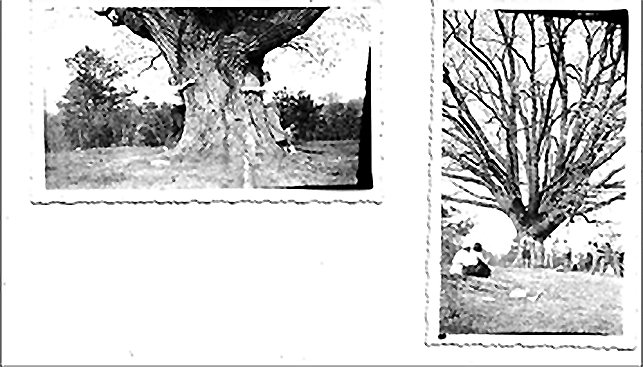
Photos of the Spencer Oak. Credit The Suffield Observer
While the tree certainly lived for a long time, not much is known about it before the 1930s when Samuel Spencer bought the property where the tree was located. Spencer took his appreciation for history that he demonstrated in preserving the Suffield Historical Society’s current home, the King House, and applied it to this magnificent oak tree. He allowed friends and Boy Scout Troop 66 to use the farmland and enjoy the tree.
When he sold the land, the next owner, John Beresford, took the tradition even further. He deeded the tree and the land surrounding it to the town of Suffield, as well as a quarter
mile trail from the road to the tree. On top of this there was a spur trail from the Metacomet Trail to the tree so hikers could admire its majesty and take a rest in its shade.
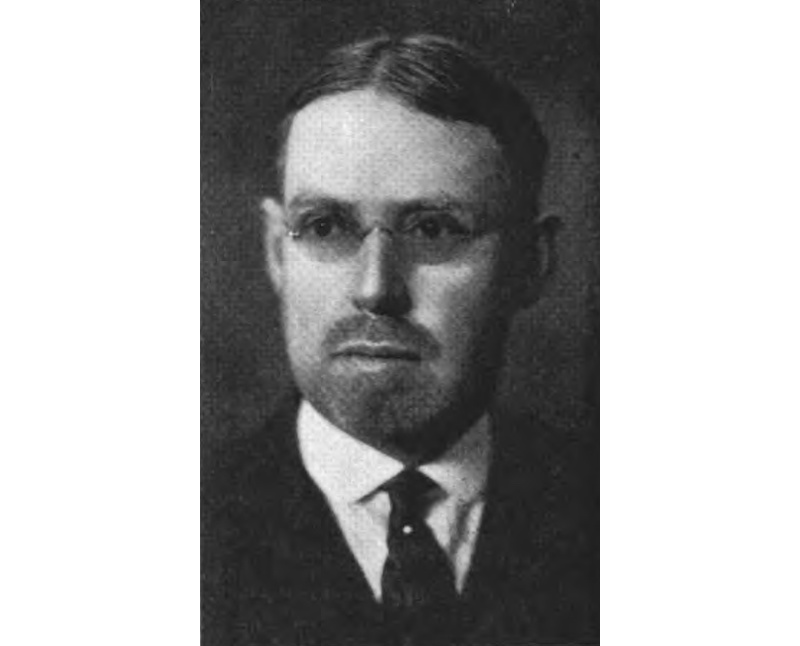
Samuel R Spencer who the tree was dedicated to. Credit Wikipedia
Sadly, no tree lasts forever. Due to a combination of age, storm damage, and gypsy moth infestations, the tree succumbed in the late 1990s. With it died the last living connection to the founding of our town, however, the memory of the tree lives on in a clock that was made from its wood that currently resides in Academy Hall in West Suffield.
The Spencer Oak was not the only tree that provided an important link to Suffield’s past and this tree even provided a monument of sorts to the American origins of a family that would go on to have a great impact both on Connecticut and the country as a whole.The tree was the Trumble Oak and it stood on River Boulevard on land that once belonged to the Trumble family who later became the Trumball family of Revolutionary War fame.
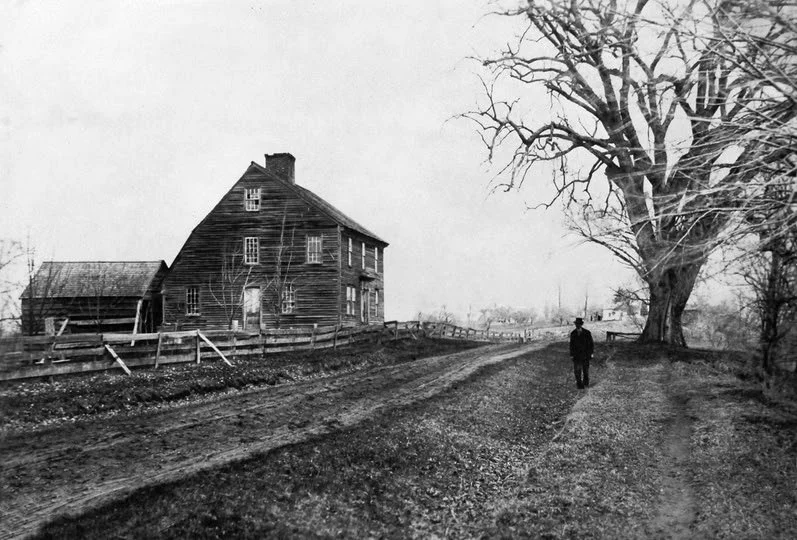
The Trumble Oak in a pre-1910 photo. Credit Kent Memorial Library
Suffield resident John Trumble Jr was the grandfather of Connecticut governor Johnathan Trumball Sr. At some point, Jonathan’s father Joseph changed the spelling of the family name for reasons lost to time. This name change does not appear to have been due to some sort of familial discord if the legend of the Trumble Oak is correct. Stories passed down over the years claim that the oak was planted by none other than Johnathan Sr himself on a visit to his grandfather’s farm in Suffield.
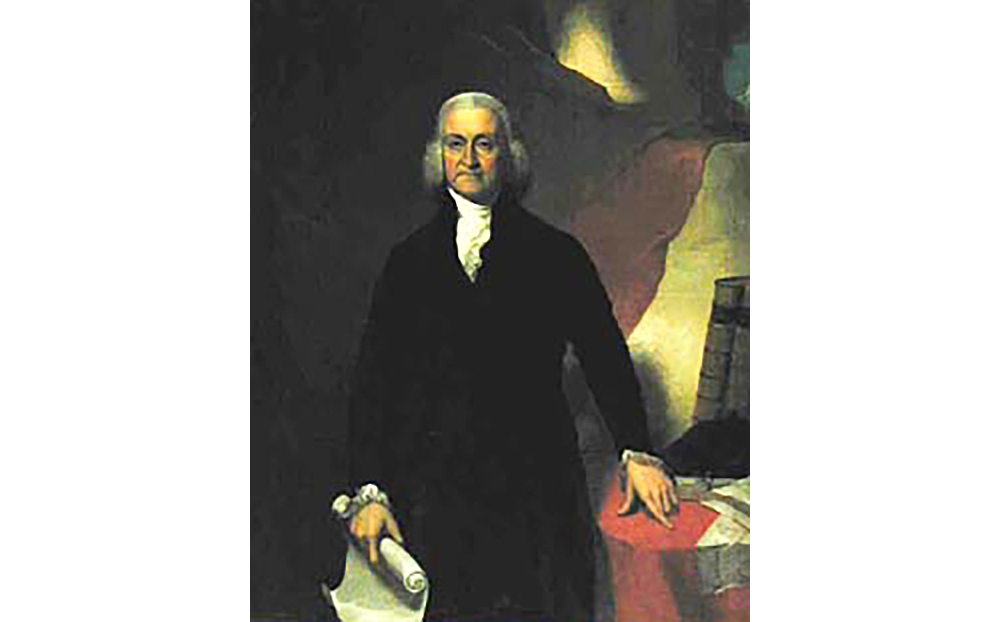
Jonathan Trumball Sr. Credit Connecticut State Library
The tree served as a reminder of Suffield’s connection to the Trumble/Trumball family and their legacy that impacted both Connecticut and our Country. In addition to his service as Governor of Connecticut, Jonathan Sr. served as a key advisor to George Washington and was known for his ability to muster provisions and recruits when the Continental Army needed it most. His sons continued to play an important role in American life after his passing in 1784. His eldest son Johnathan Jr. was both Speaker of the United States House of Representatives and Governor of Connecticut. A younger son, John, became known as the “Painter of the Revolution” with his most famous being his depiction of the signing of the Declaration of Independence.
This oak was not to last as long as the Spencer Oak. In 1910, at less than 200 years old, the tree died and was cut down. Another living link to Suffield’s history was gone.
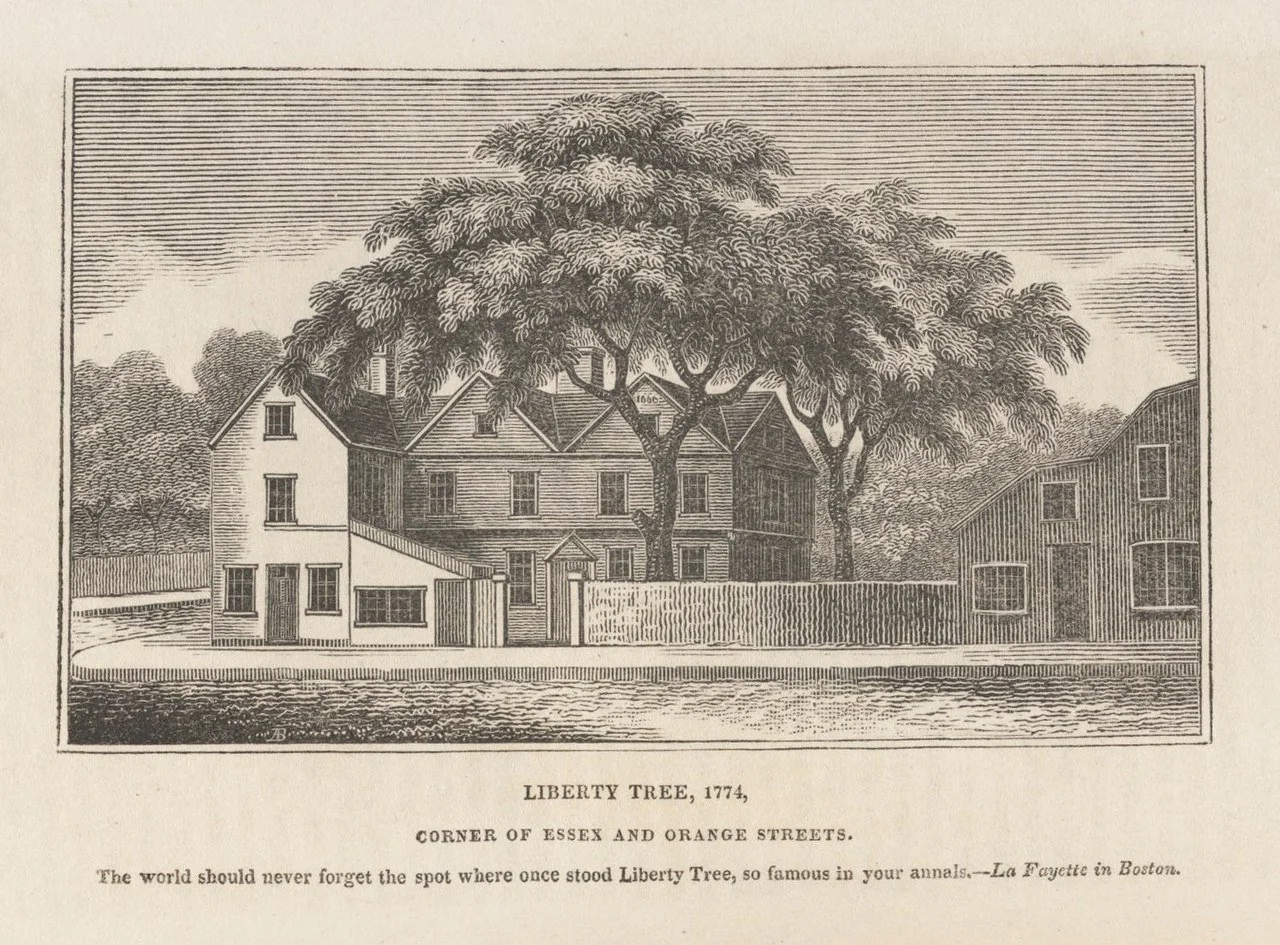
The Original Liberty Tree in Boston. Credit Houghton Library.
Today, there are no trees in Suffield with the same sort of importance to the community as whole that the Spencer and Trumble Oaks had. My hope is that this will change soon. On April 25 at 4 PM, the Town of Suffield, Suffield’s America 250 Committee, Sustainable Connecticut, and the Trees for Suffield Initiative will dedicate a Liberty Tree to celebrate our country’s 250th birthday. and members of the public are invited to attend.
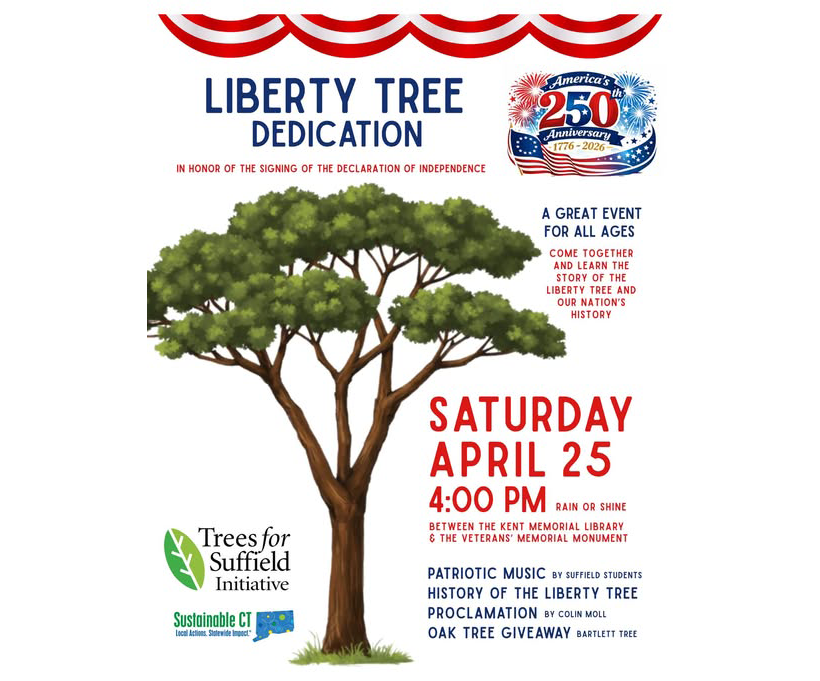
Credit Trees for Suffield Initiative
My hope is that this tree will be standing 250 years from now and it serves as a living reminder of Jefferson’s immortal words “We hold these truths to be self-evident, that all men are created equal, that they are endowed by their creator with certain unalienable rights, that among those are life, liberty and the pursuit of happiness.” Over that time, I wish that those that come after us do not water this tree with the “blood of tyrants and patriots”, but instead work for a “more perfect union” by following the advice of Dr. Martin Luther King Jr by ensuring that nonviolence is “the answer to the crucial political and moral questions” of their time.
Bibliography
Alcorn, Robert Hayden. A Biography of a Town: Suffield Connecticut 1670-1970. Suffield, Connecticut: 300th Anniversary Committee of the Town of Suffield, 1970.
Baker, Mark Allen. Connecticut families of the revolution: American forebears from Burr to Wolcott. Charleston, SC: History Press, 2014.
Harrington, Adam. “The Forest We Lost — And the One That Came Back.” YouTube, December 9, 2025. https://youtu.be/vQlYZh0q_t8?si=v-jY2hk1BJG8EzUn.
“Indigenous Fire Practices Shape Our Land.” National Parks Service, March 18, 2024. https://www.nps.gov/subjects/fire/indigenous-fire-practices-shape-our-land.htm#:~:text=Some%20tribes%20in%20the%20western%20states%20also,were%20used%20for%20ceremonial%20dress%20(Roos%2C%202021).
“ORNAMENT HONORING TOWN’S ROOTS DEPICTS OAK AND MAN WHO LOVED IT.” Hartford Courant, December 11, 1995. https://web.archive.org/web/20260408234107/https://www.courant.com/1995/12/11/ornament-honoring-towns-roots-depicts-oak-and-man-who-loved-it-2/.
Smith, S. J., McCarthy, B. C., Hutchinson, T. F., & Snell, R. S. (2021). Both weather and resources influence masting in chestnut oak (Quercus montana Willd.) and black oak (Q. velutina Lam.). Plant Ecology, 222, 409-420.
Tavino, Laurie. Suffield’s Old Bridge Neighborhood. Charleston, SC: Arcadia Publishing, 2009.
