

When the Airport Almost Ate Suffield
Another year is almost in the books! As I reflect on another wonderful holiday season, I recall that some of my favorite memories center around Bradley International Airport. In particular, I was always excited to pick up my aunt who lived far away. It was always a treat to see her because she only traveled here at certain times of the year.
My dad and I would always arrive a little early, park our car, and then head into the terminal. We would find a prime spot to watch the planes take off and land. My dad would check the terminal screens ever so often to see if my aunt’s flight has landed. Once it landed, we would head to her gate and wait impatiently as the passengers got off the plane. After what seemed like forever, she would appear, and it would be off to spend time together. This, of course, was pre-9/11, and while I am no longer able to go to the gate to see her, the anticipation of her holiday visit still brings me joy.
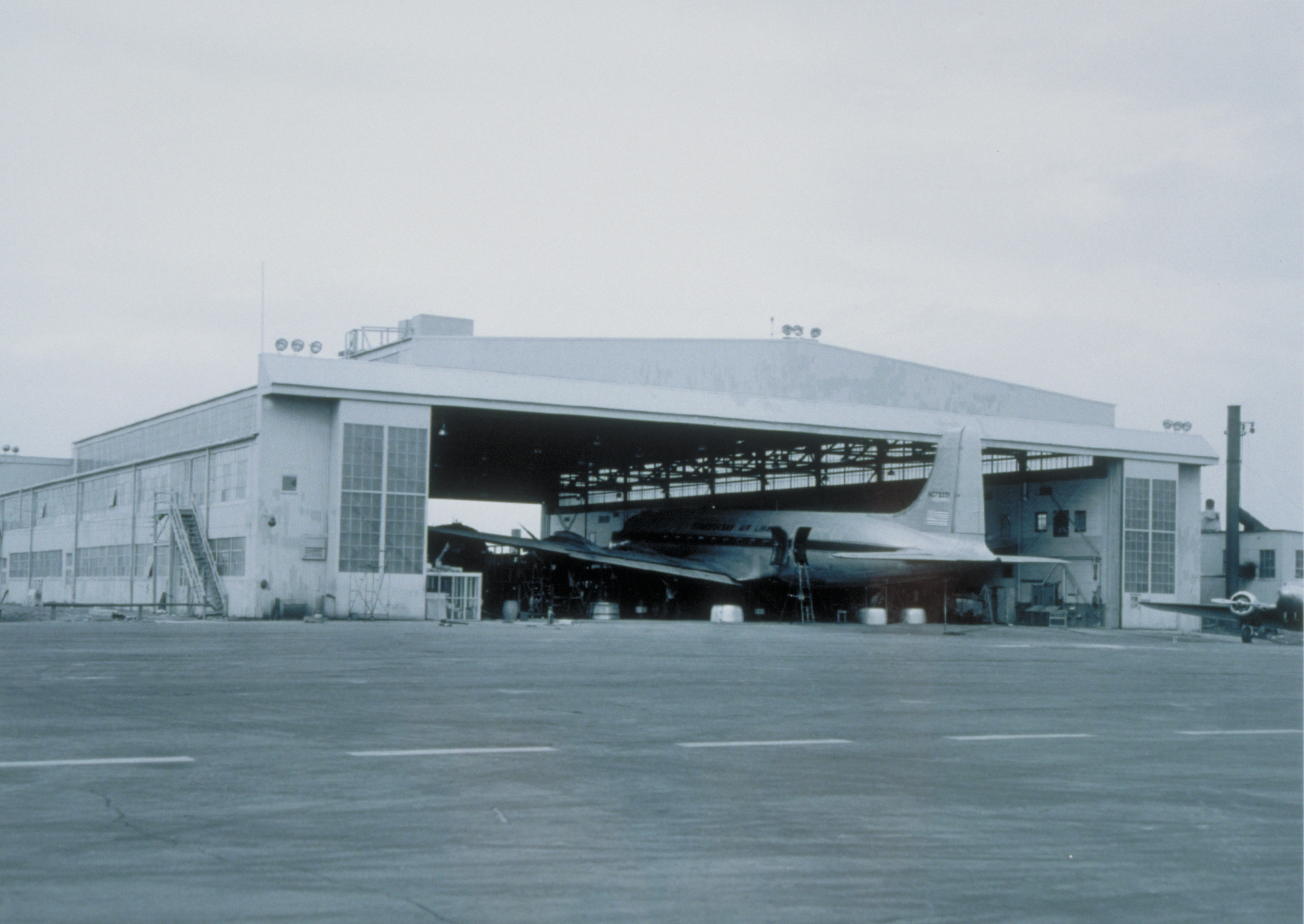
Bradley Field, Windsor Locks, 1948 - Thomas J. Dodd Research Center, University of Connecticut Libraries and Connecticut History Illustrated
While going to the airport brought me joy as a child during the holidays, I have the feeling that I would have felt very differently as a child growing up in this town in 1967. It was at that time that Suffield faced a threat that nearly erased a quarter of the town. This is the story of the attempted Bradley Airport expansion and the brave Suffield citizens that prevented it from happening.
The trouble began on January 10, 1967, when the Connecticut Aeronautics Commission (CAC) voted to double the size of Bradley Airport. In an article published in the Springfield Daily News, Director of the Connecticut Department of Aeronautics, Hank B Wetherall, stated that the expansion was required to enable increased cargo and international passenger traffic. While these needs may have been top priority to the CAC, they would soon discover that this view was not shared by the citizens of the impacted towns of Suffield and East Granby.
The proposed expansion would have greatly impacted the two towns and would have made Suffield unrecognizable. The expansion would have begun at School Street in East Granby in the south. The western border would have run from East Street in East Granby up South Grand Street in Suffield until it reached Sheldon Street. The northern boundary would have followed Sheldon Street to Mountain Road and the eastern boundary would have been a line that ran from Mountain Road south through where Hale Street and Spencer Brook meet and continue running south into Windsor Locks.
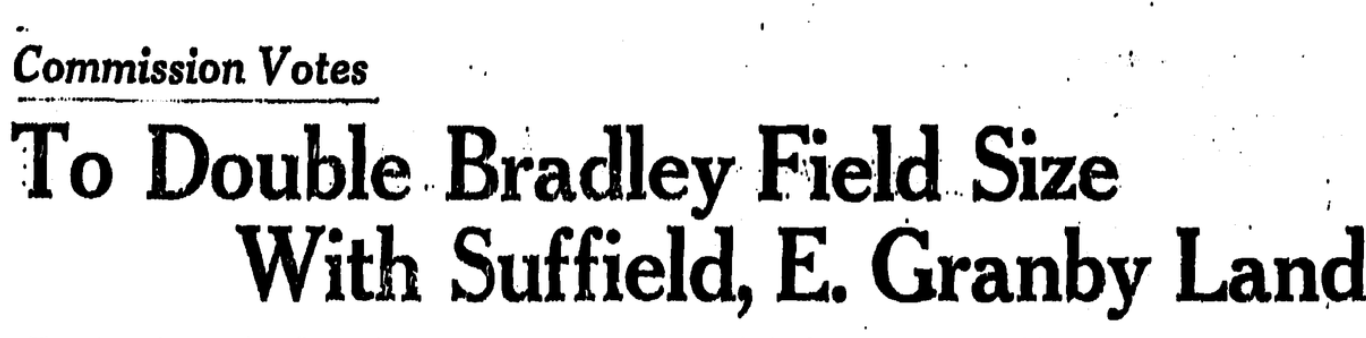
Credit Springfield Daily News
A Committee of Concerned Citizens was formed quickly and based their opposition on the following points: the expansion was unnecessary, the noise and exhaust pollution would have a detrimental impact on the community, especially children, the placement of runways near densely populated areas represented a material safety concern, no local elected officials had been consulted on the matter beforehand, and the towns themselves had not had a chance to vote on the measure. This group was led by Edward Cordis Jr., and it recruited experts and organized ordinary people to oppose the expansion.
Before the Committee began their work in earnest, a key decision was handed down by the Connecticut Supreme Court that set the ground rules for the upcoming fight. In this decision, the court stated that CAC could only seize the land for the airport if one of two conditions were met. Either the towns voted via referendum to approve the expansion or if the CAC could prove in court that the need for the expansion was evident enough to overcome any objections from the public.
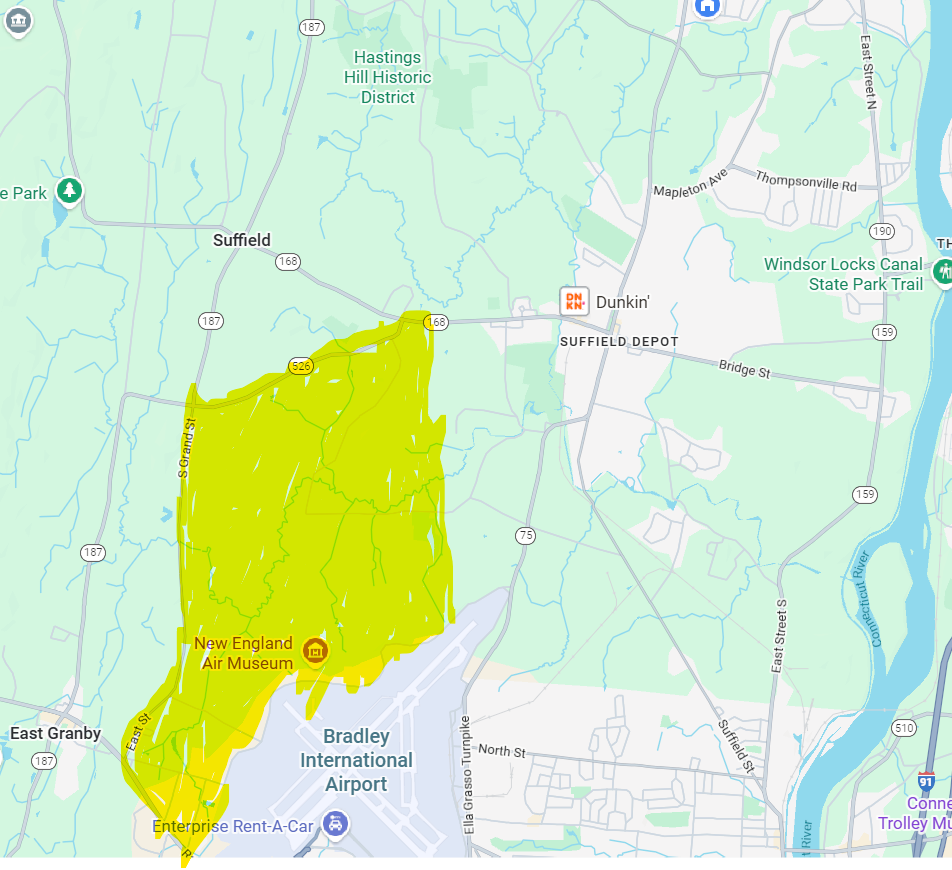
A map showing the area that would have been taken from Suffield as part of the expansion. Credit Google Maps
After two years of back and forth, the CAC agreed to hold a public hearing on the airport expansion at the then brand new Suffield High School (now known as the middle school). The Committee succeeded in packing the school to the gills with over 1100 people attending and many more being turned away due to a lack of parking. Additionally, their impressive list of expert speakers surgically deconstructed the argument for expansion.
The speakers specifically attacked the need for the airport expansion and highlighted the danger that this expansion posed to the town. Suffield resident, pilot, engineer, and Apollo program contractor Richard Rachals, debunked the need for increased runway space by explaining that the short takeoff and landing aircraft were going to eliminate the need for long runways. East Granby resident, Conrad Hemond, provided evidence that the areas near the end of the runways would be subject to noise levels in excess of 120 decibels, which would be especially damaging to the hearing of the children of Spaulding Elementary which was directly in the flight path. Suffield resident, Gregor Lang, rounded out the group and spoke of the dangers of aircraft failures and the impact they could have, given how close the center of Suffield would be to the end of the expanded runways. Despite this expert testimony, the CAC decided to press on with their plans.
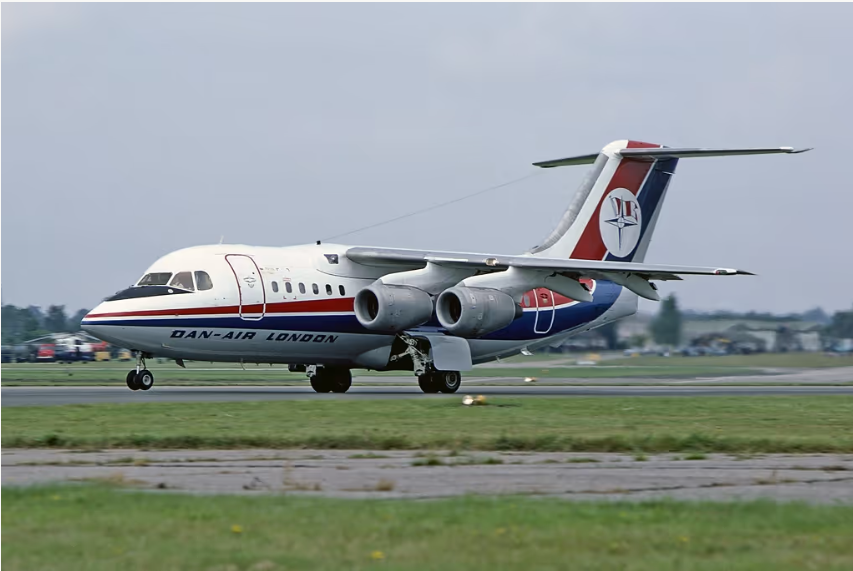
The Bae 146 the first STOL Jet. Credit Airways Magazine
While the CAC may not have been impressed, the citizens of Suffield were, and they showed this by voting 3-1 to oppose the expansion at a referendum held on June 5, 1969. Even this resounding rebuke could not change the minds of the CAC, and the issue began to play out in the courts. However, in less than a year’s time the project would go out with a whimper.
On May 12, 1970, the newly formed Department of Transportation abruptly ended their lawsuit against Suffield and East Granby, saying there was no longer a need for the expansion. State Transportation Commissioner George J Conkling reexamined the projections that stated that Bradley would be overwhelmed with passengers and cargo by 1972 and found that this scenario was not on track to come to fruition. Instead, Conkling put a moratorium on expanding the airport until 1980 and pledged to upgrade existing facilities and only use land the airport currently owned. Just like that, the greatest threat to the existence of Suffield was gone.
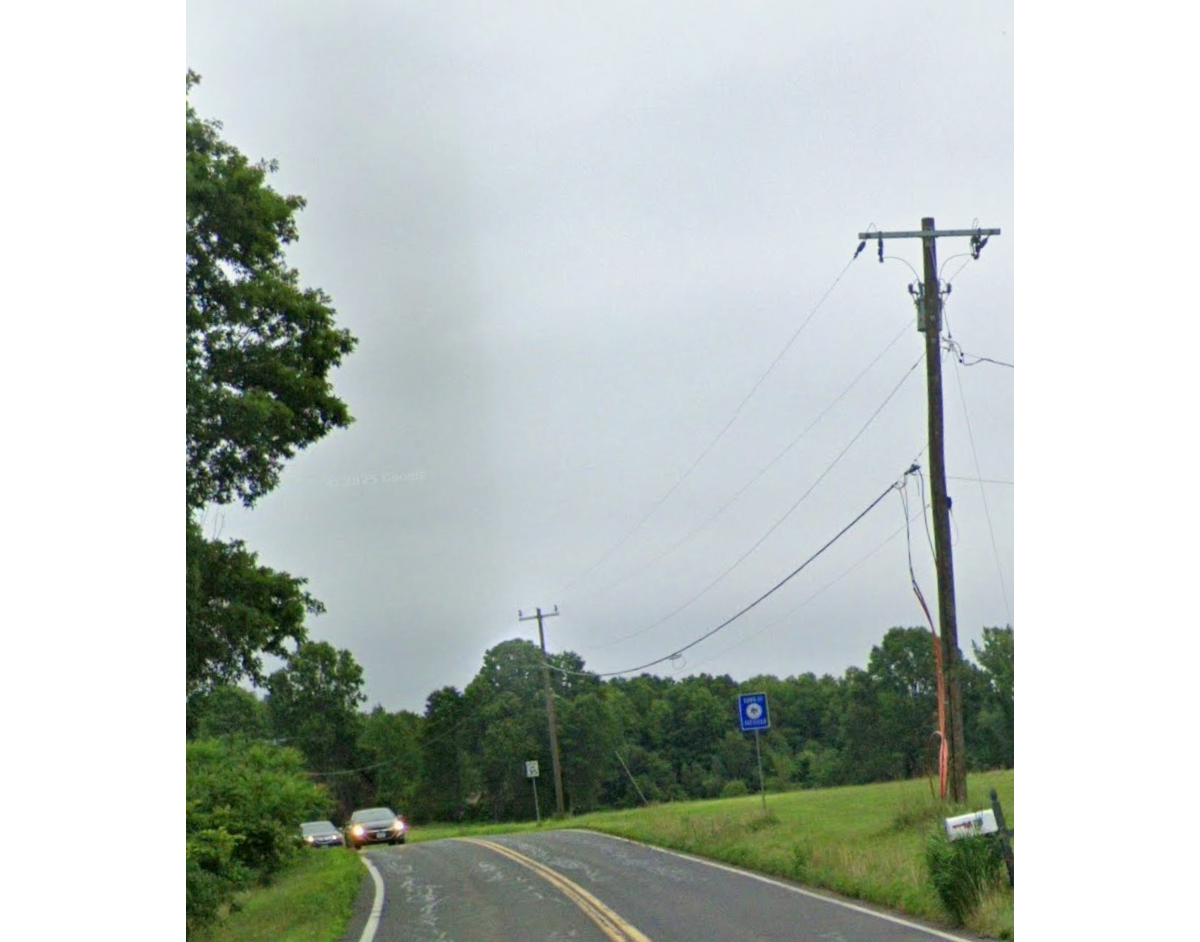
A photo of where Suffield and East Granby meet today. Credit Google Earth
The Suffield we know and love today exists because of people like Edward Cordis Jr., Richard Rachals, Conrad Hemond, Gregor Lang and all of the men and women who gave their time and financial support to the cause of fighting a potentially ruinous decision. To really understand what these people did for us, I encourage you to drive around Perimeter Road near the airport and take in the sights and sounds of the airport, and then do the same in the areas of the proposed expansion. I hope that after that experience, you have a deeper appreciation of the beauty that this town has to offer and the people who found to keep it that way.
In closing, I hope you and your loved ones had a Happy Holidays and I wish you a safe, happy, and a healthy New Year.
Bibliography
Alcorn, Robert Hayden. A Biography of a Town: Suffield Connecticut 1670-1970. Suffield, Connecticut: 300th Anniversary Committee of the Town of Suffield, 1970.
“Com. Against Bradley Plan Active in a Variety of Ways.” Springfield Daily News, January 9, 1969.
“Commission Votes to Double Bradley Field Size with Suffield, E. Granby Land.” Springfield Daily News, January 11, 1967.
“Court Rebuffs State on Bradley Field.” Springfield Daily News, November 15, 1967.
Harmon, Walter F. “Connecticut Valley Airports: STOL May Ease Congestion.” The Springfield Sunday Republican, March 2, 1969.
“State to Shelve Bradley Airport Expansion Push.” Greenwich Times, May 12, 1970.
