

Suffield’s Medication of Yesteryear: The Good, the Bad, and the Ugly
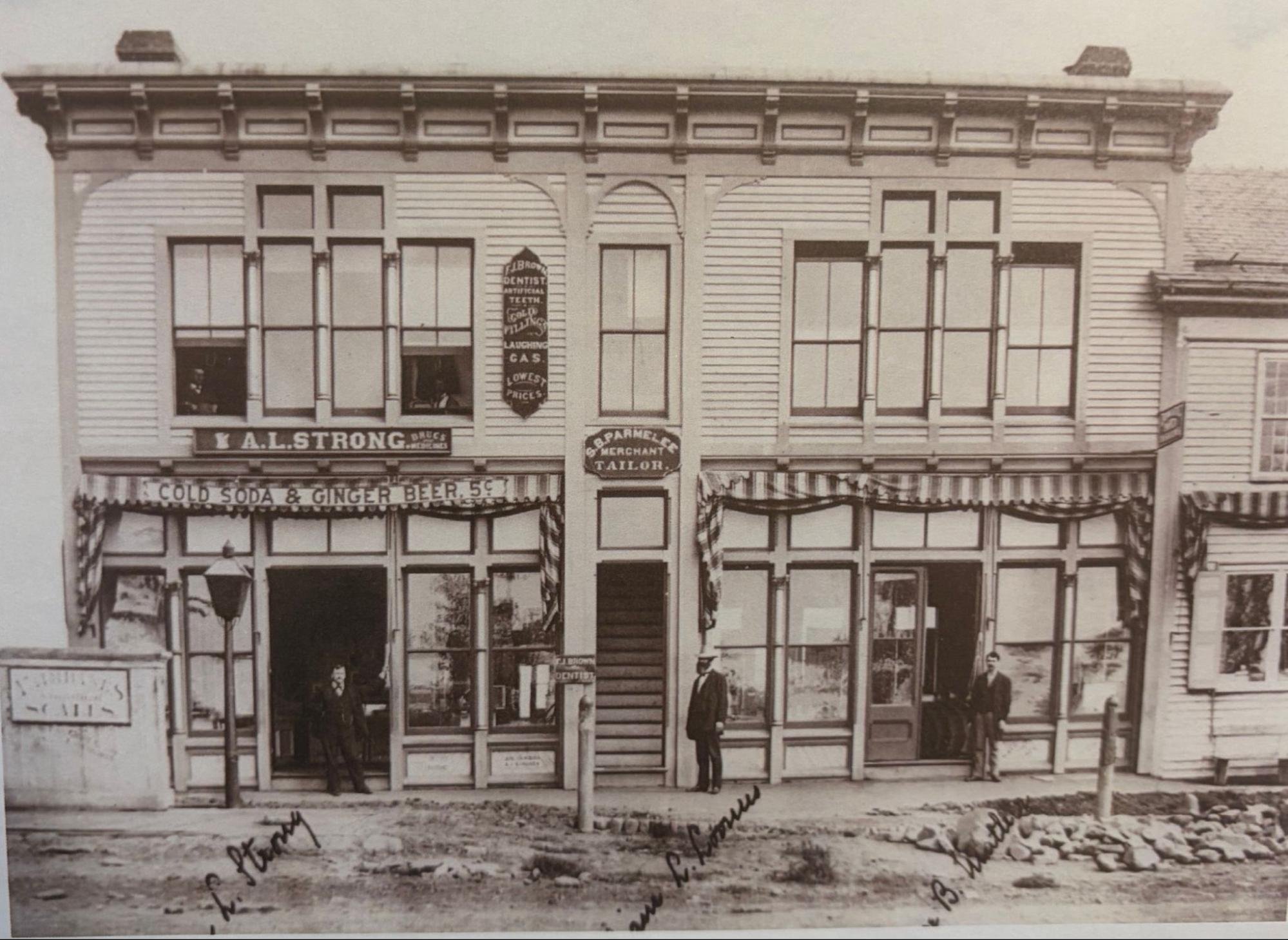
An 1876 photo of the Suffield Pharmacy: Credit Suffield Historical Society
When I was growing up in Springfield, one of my favorite neighborhood stores was our local pharmacy. It was among the last of a dying breed, a true independent drugstore. When I went there, I was less interested in the medication and more focused on getting myself some candy with my allowance money. In particular, I loved tootsie pops, and it was the sort of establishment that would give you an extra lollipop if the one you picked out originally had a star on it.
A collection of medicine bottles from the Suffield Pharmacy were recently donated to the Suffield Historical Society by Darryl Madey and are now on display at the West Suffield Academy Hall. While I lament the loss of the locally owned and operated pharmacy, my recent research into this collection makes me realize that at times, I am looking on the past with rose-colored glasses.
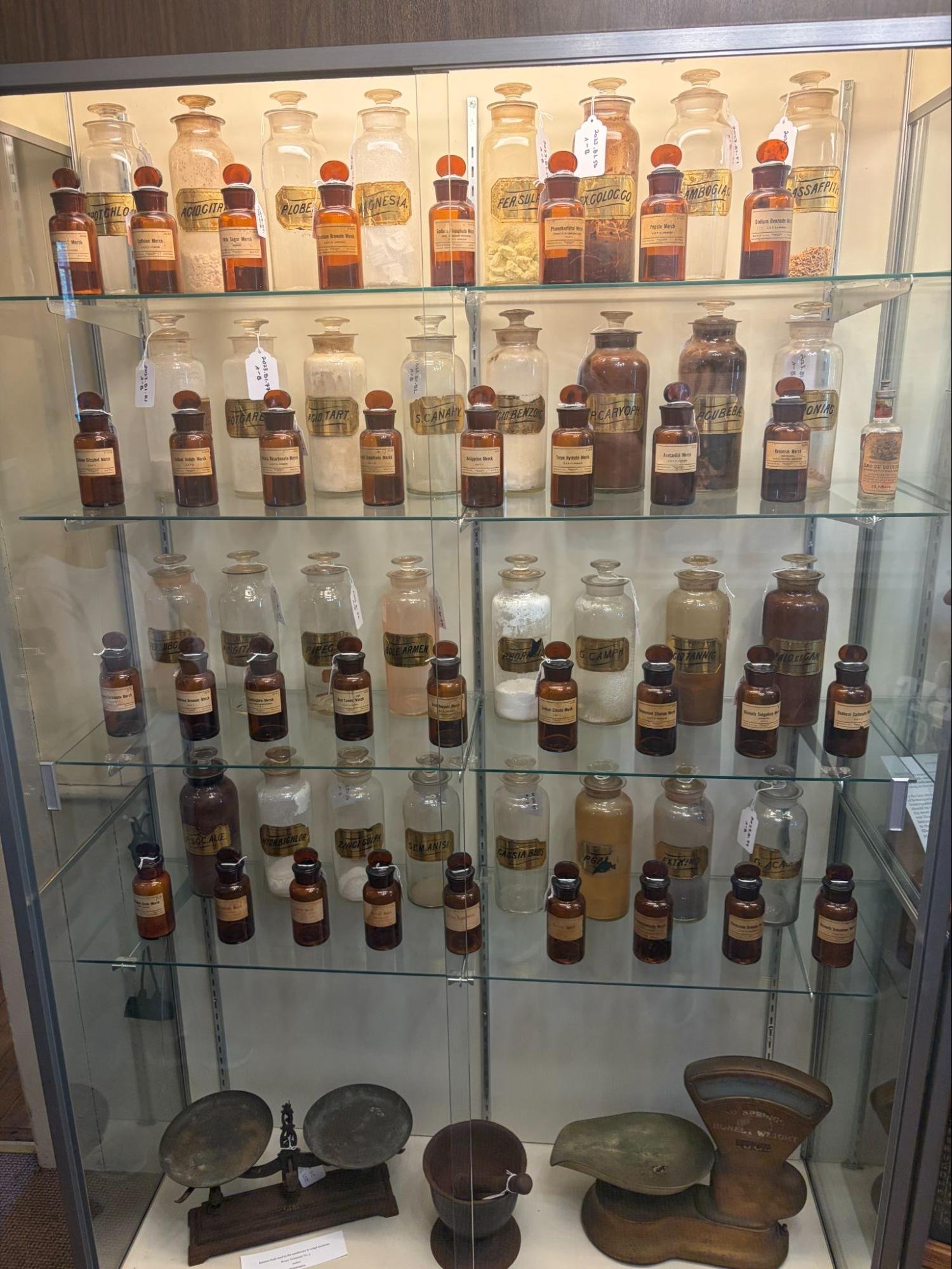
A part of the Suffield Pharmacy collection at Academy Hall including some of the medications featured in this blog.
For this blog I am going to focus on the good, the bad and the ugly of the medications in the collection. A full list of medications and their uses can be found at the end of this blog.
The Good
Most of the drugs in the collection are either still in use or were safe medications that were eventually replaced by more advanced treatments. One of the most commonly used drugs, still a staple in drug stores today, is acid acetylsalicylic aka aspirin. Aspirin was synthesized by the German company Bayer in 1897 and first produced in the United States in 1903. The drug was seen as effective, and sales peaked in the early 1950s. With the discovery of acetaminophen and ibuprofen in the mid 1950s and early 1960s respectively and its correlation with the brain-damaging Reye Syndrome in babies, aspirin entered a decline in relevance. Aspirin’s fortunes rebounded in the 1980s when it was found that it had anticlotting properties that made it beneficial for patients at risk of heart attacks or strokes. Today, aspirin is still a trademark of Bayer AG so the label of acid acetylsalicylic indicates that the bottle in the Suffield Pharmacy collection is from another manufacturer.
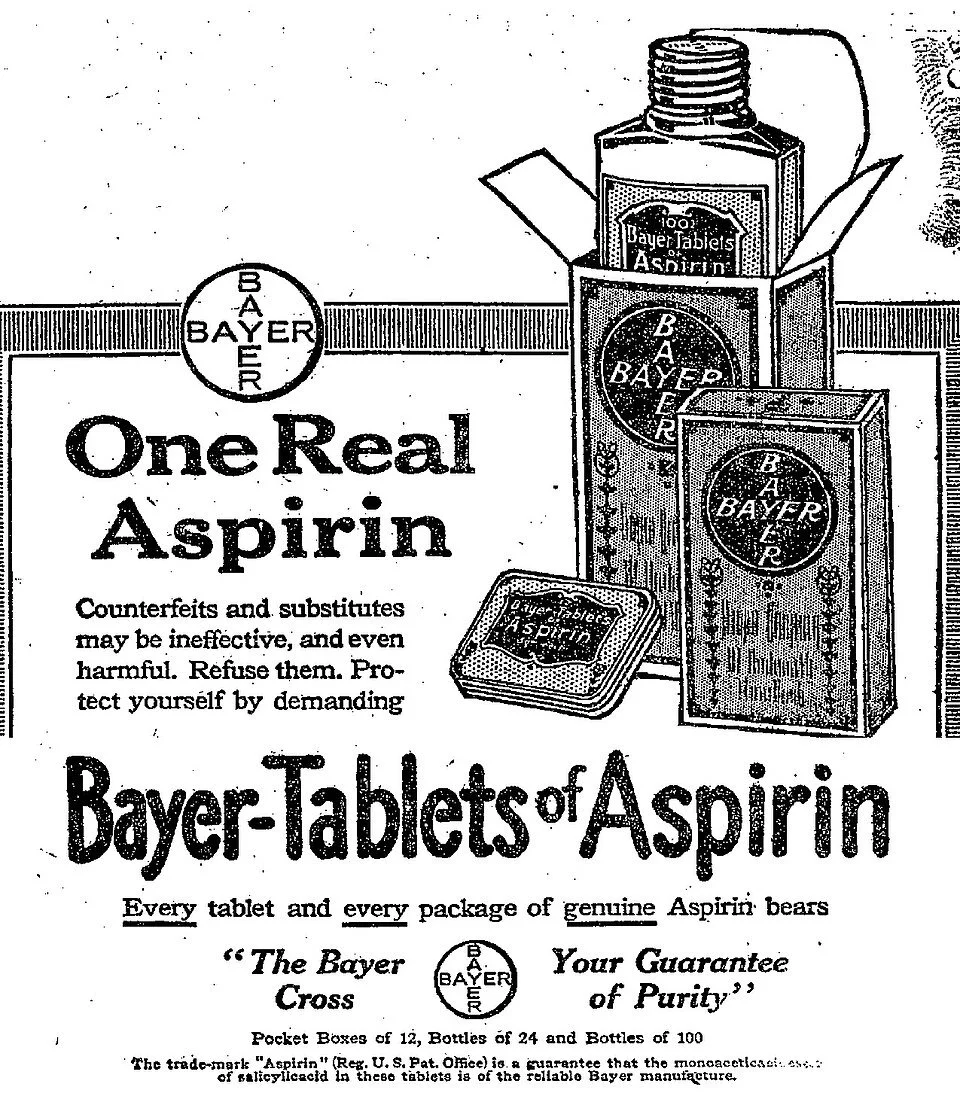
A Bayer ad for Aspirin from 1917. Credit The New York Times
The Bad
While it is still used in medical settings today, cobalt is one bottle you would never see today on a pharmacy shelf. Small amounts of the metal were used to give a beautiful blue color to tonics and some medication. However, this use for cobalt was discontinued because it is a heavy metal, and long periods of exposure could lead to serious medical complications. Today, cobalt is still used in medicine to treat cancer as the source of radiation in radiation therapy and as a sterilizing agent for medical equipment. Although cobalt in the pharmacy was bad, it still has valid medical uses today and is nowhere near as ugly as our next bottle from the collection.
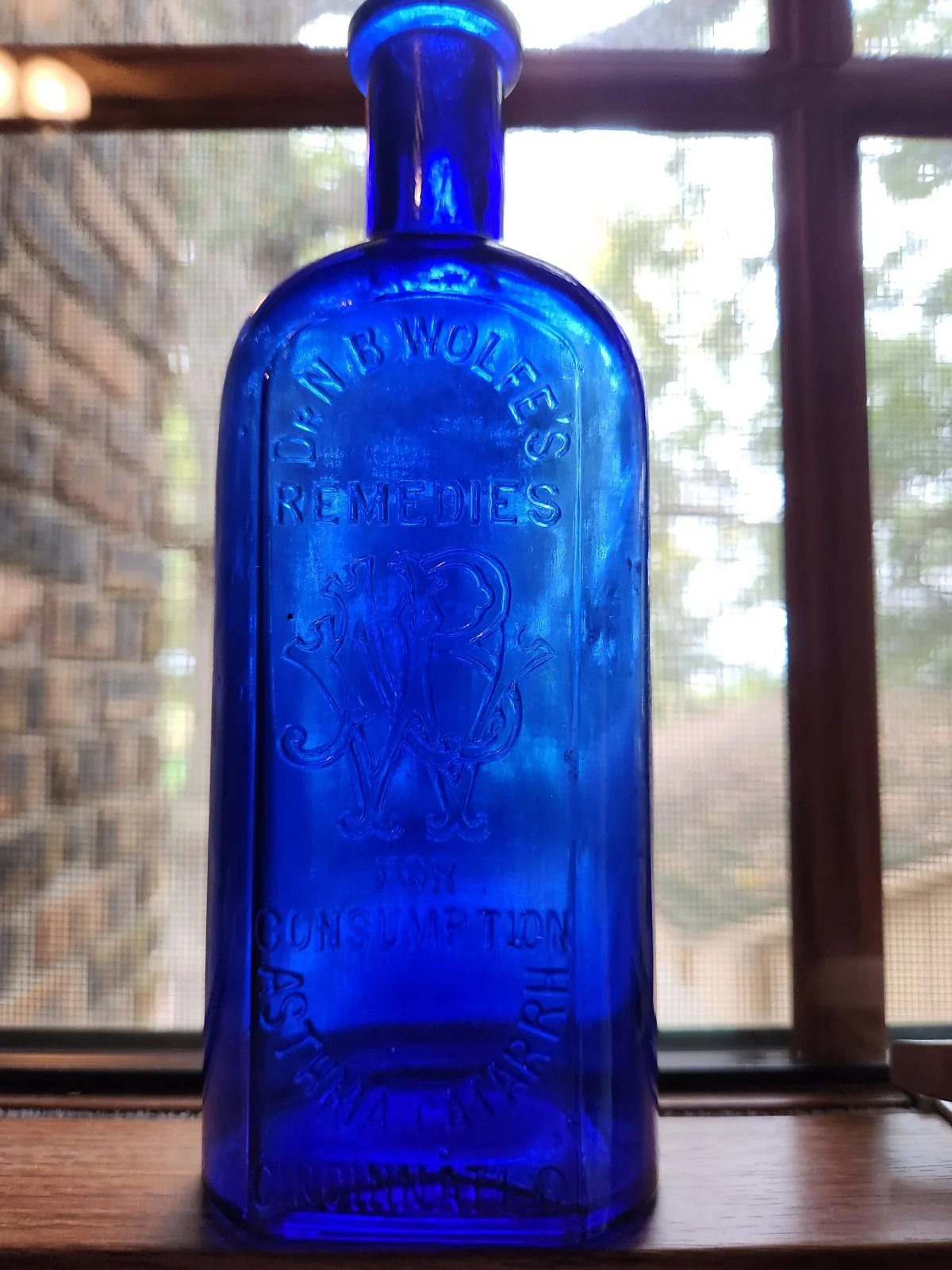
A vintage cobalt blue medicine bottle. Cobalt was used to color the glass. Credit antique-bottles.net
The Ugly
Calomel does not sound like the name of a nasty drug. It comes from the Greek meaning “beautiful black” for the way it reacts with ammonia. The two chief uses of the drug were as a laxative and as a gum softener for teething babies. None of this sounds particularly nefarious until you learn that the scientific name for calomel is mercury chloride.
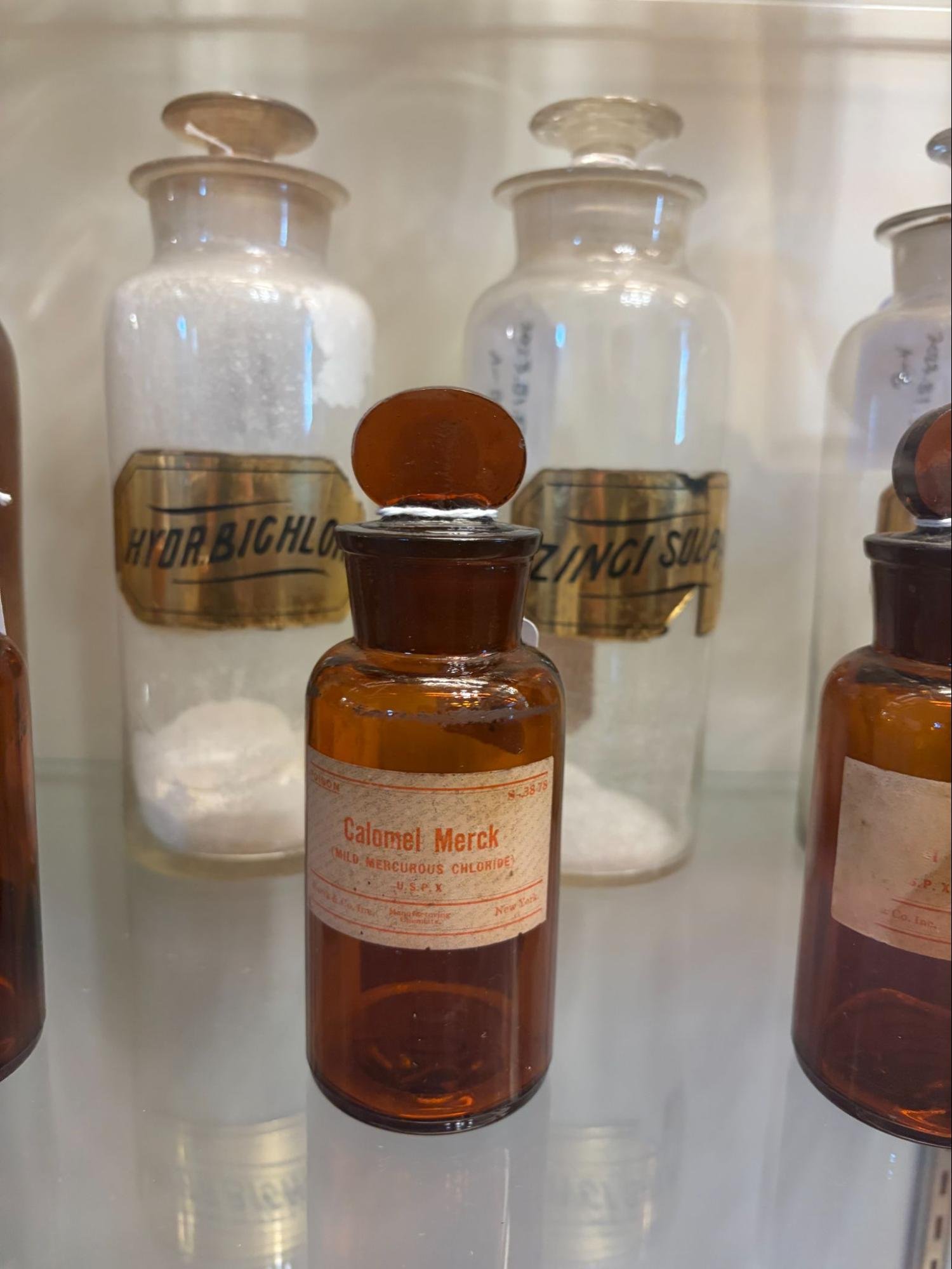
The bottle of calomel from the Suffield Pharmacy collection. Author photo.
Calomel was an effective laxative because the body attempts to expel it as quickly as possible due to its toxicity. Additionally, it is effective as a gum softener because it is able to break down the tissue in an infant’s mouth. In many cases, both adults and children suffered from mercury poisoning due to exposure to calomel. Despite documentation linking it to mercury poisoning as early as the 1850s, calomel continued to be used well into the 1940s when it was eventually banned by the FDA.
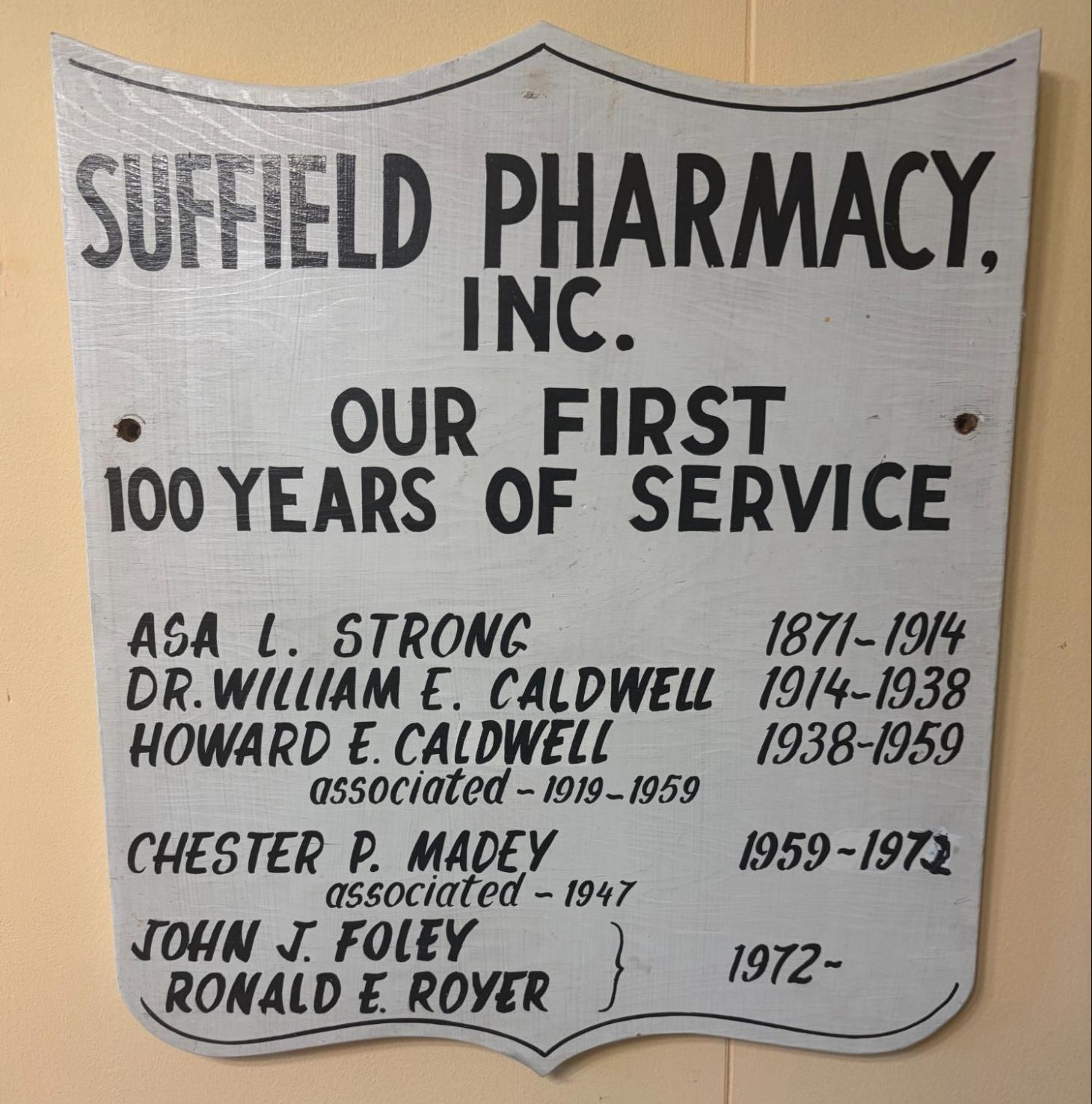
A sign celebrating the Suffield Pharmacy Centennial that is on display at Academy Hall. Author photo
This summer, I hope you take the time to see this truly unique piece of Suffield. The Suffield Pharmacy collection along with other exhibits will be on display at Academy Hall in West Suffield on Saturdays from 1 PM to 4 PM except July 4th. Stay cool and Happy 250th Birthday America!
Bibliography
Mann, Charles C., and Mark L. Plummer. The aspirin wars: Money, medicine, and 100 years of rampant competition. New York, NY: Knopf, 1991.
“Radionuclide Basics: Cobalt-60 | US EPA.” Radiation Protection, June 13, 2008. https://www.epa.gov/radiation/radionuclide-basics-cobalt-60.
Schroeder-Lein, Glenna R. The Encyclopedia of Civil War Medicine. London, UK: Routledge, Taylor and Francis, 2015.
